Concrete performance depends on much more than cement strength alone. Material selection, mix proportions, curing conditions, exposure environment, and supplementary cementitious materials can all influence how a structure performs over time. This is why GGBS has become an important material for construction teams looking beyond basic compressive strength.
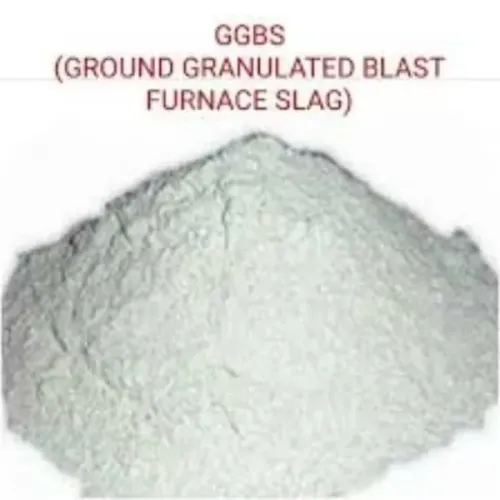
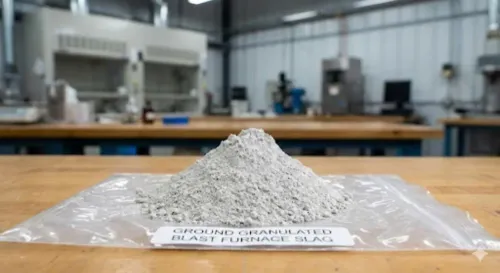
Reliable GGBS manufacturers process granulated blast furnace slag into a finely ground material that can be incorporated into concrete and cementitious systems. When properly specified and used, GGBS can contribute to durability, workability, long-term strength development, and reduced dependence on conventional Portland cement.
For construction companies, ready-mix concrete producers, infrastructure developers, and precast manufacturers in Nagpur, understanding what GGBS actually contributes to concrete is useful before deciding where and how it should be used.
What GGBS Does Inside Concrete
Ground Granulated Blast Furnace Slag is a supplementary cementitious material. Rather than simply acting as an inert filler, it participates in cementitious reactions within the concrete system.
Its contribution depends on factors such as:
- GGBS fineness and quality
- Replacement percentage
- Cement characteristics
- Water-binder ratio
- Concrete grade
- Curing conditions
- Ambient temperature
- Required early-age performance
A properly designed GGBS concrete mix can develop desirable long-term properties while helping construction teams use cementitious materials more efficiently.
Improved Long-Term Strength Development
One important characteristic of GGBS concrete is its strength-development profile. Depending on the mix design and curing conditions, early strength development may differ from conventional concrete, while later-age strength can continue developing effectively.
This makes mix-design planning important.
Instead of selecting GGBS solely on the assumption that adding it automatically improves concrete, engineers should evaluate the complete binder system and the performance requirements of the project.
Better Durability for Demanding Structures
Durability is a major concern in infrastructure and industrial construction. Concrete may be exposed to moisture, chemicals, aggressive environments, temperature variations, and other conditions throughout its service life.
Appropriately designed GGBS concrete can help create a denser cementitious matrix and may improve resistance to certain deterioration mechanisms.
This is particularly relevant for applications such as foundations, industrial structures, large infrastructure works, water-retaining structures, and other projects where long-term material performance matters.
Workability Can Also Improve
Fresh concrete needs to remain practical to mix, transport, place, compact, and finish.
GGBS is often considered when engineers are developing concrete mixes where workability and consistency are important. However, the final performance still depends on the complete mix, including aggregates, admixtures, water content, cement, and production controls.
Ready-mix concrete manufacturers should therefore assess GGBS as part of an integrated mix-design process rather than as an isolated ingredient.
GGBS Supports Lower-Clinker Concrete Strategies
The construction sector is increasingly examining how concrete can be produced with greater material efficiency and a lower environmental impact.
Replacing a portion of conventional cement with suitable supplementary cementitious materials can reduce reliance on clinker-intensive binders. GGBS therefore has an important role in many sustainable concrete strategies.
The actual environmental benefit should always be evaluated according to material source, processing, transportation, replacement level, and overall concrete design.
Quality Still Determines Performance
Not every material sold under the same broad category will necessarily perform identically.
Engineers and procurement teams should evaluate characteristics such as fineness, consistency, chemical properties, physical properties, storage conditions, and conformity with relevant project requirements.
For buyers sourcing material in Nagpur, dependable supply is also important. Large concrete operations need predictable material characteristics from one delivery to the next because unexpected variation can affect batching and concrete performance.
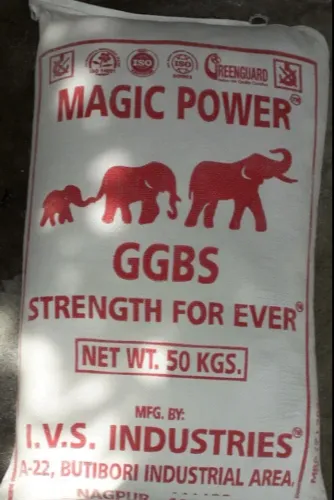
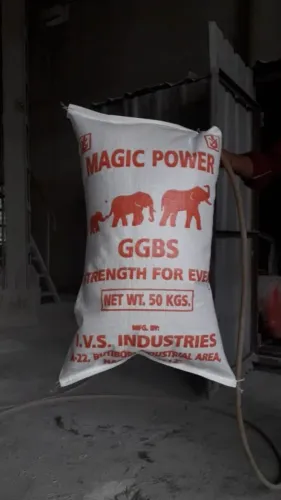
IVS Industries operates in the GGBS and sustainable construction materials segment, serving requirements where consistent material selection is an important part of concrete production.
Ultimately, GGBS works best when it is treated as an engineered component of concrete rather than simply as a cement replacement. Understanding its characteristics, selecting suitable material, and developing the right mix design can help construction teams achieve concrete that meets both structural and long-term performance objectives.
Keywords