Bulk GGBS purchasing creates a commitment that extends beyond the first truckload. Once a material is incorporated into approved concrete mixes, changing suppliers can require additional evaluation, trials, documentation, and production adjustments.
Asking the right questions before selecting GGBS Manufacturers can therefore prevent avoidable procurement and quality problems.
What Material Specifications Can You Provide
Begin with the technical fundamentals.
Ask the manufacturer for relevant information about the supplied GGBS and determine whether it aligns with your project specification.
Do not treat technical documentation as a formality. It should be reviewed by personnel capable of assessing whether the material is suitable for the intended concrete application.
How Do You Control Product Consistency
Consistency is particularly important for commercial concrete production.
Ask how key material characteristics are monitored and how variation is managed across production batches.
For ready-mix and precast businesses, stable raw-material properties make it easier to maintain established concrete mix performance.
Can the Material Be Evaluated Before Bulk Procurement
For substantial orders, buyers should consider trial evaluation before committing to ongoing supply.
Concrete trials using the actual project materials can reveal practical information about:
- Workability
- Admixture compatibility
- Strength development
- Finishing behaviour
- Production suitability
- Project-specific performance
A trial programme should be designed around the intended application.
What Volumes Can You Supply Consistently
Do not ask only about maximum theoretical production.
Discuss the quantities your project will actually need and how frequently they must arrive.
A useful conversation should cover average monthly consumption, peak requirements, order lead time, and dispatch planning.
How Will Deliveries Reach the Project
Transportation has both operational and financial implications.
Buyers in Nagpur should establish the delivery arrangement, approximate planning requirements, unloading method, and responsibilities clearly before regular orders begin.
This also makes it easier to calculate the actual delivered cost of the material.
What Happens When Demand Suddenly Increases
Construction programmes rarely remain perfectly predictable.
A major pour may be brought forward or monthly consumption may rise.
Ask how the supplier handles changes in demand and how much notice is normally required for larger quantities.
The answer helps procurement teams determine appropriate safety stock.
Is the Material Suitable for Our Specific Application
This question is more valuable than simply asking whether the supplier sells GGBS.
Explain whether you operate a ready-mix plant, precast facility, infrastructure project, industrial project, or another concrete application.
The appropriate material and mix strategy may differ depending on early strength, durability, workability, curing, and production requirements.
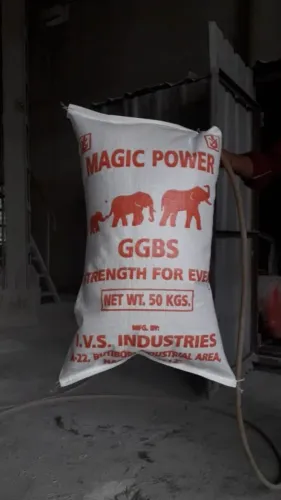
IVS Industries operates in the GGBS, Ultra Fine GGBS, and sustainable concrete materials segment, serving construction-material requirements where these technical and procurement considerations matter.
What Commercial Factors Should Be Clarified
Before final approval, make sure the commercial discussion covers:
- Material pricing basis
- Transportation implications
- Minimum quantities where applicable
- Payment terms
- Dispatch lead time
- Order procedures
- Delivery coordination
Clear terms reduce misunderstandings once regular procurement begins.
What Should We Monitor After Approval
Supplier evaluation should continue after the first successful delivery.
Concrete producers can monitor incoming material consistency alongside fresh-concrete observations, strength results, and other relevant quality data.
If performance begins changing, having historical records makes investigation easier.
Make the Final Decision Systematically
A manufacturer should ideally satisfy four broad requirements.
Technical readiness means the material aligns with specifications and performs acceptably in evaluation.
Production readiness means quality and consistency can support routine concrete manufacture.
Logistics readiness means required quantities can reach the buyer according to a workable schedule.
Commercial readiness means pricing and purchasing terms make sense at the required scale.
When all four areas are considered together, bulk GGBS procurement becomes more disciplined and less dependent on assumptions.
For construction companies, infrastructure developers, RMC producers, precast manufacturers, and industrial buyers, that preparation is valuable. The objective is not simply to purchase GGBS at an attractive rate. It is to establish a dependable material supply that supports consistent concrete production throughout the project.
Keywords