
Precast concrete manufacturing operates differently from conventional site concreting. Production cycles are controlled, mould utilisation matters, dimensional consistency is important, and early-age performance can directly affect factory productivity.
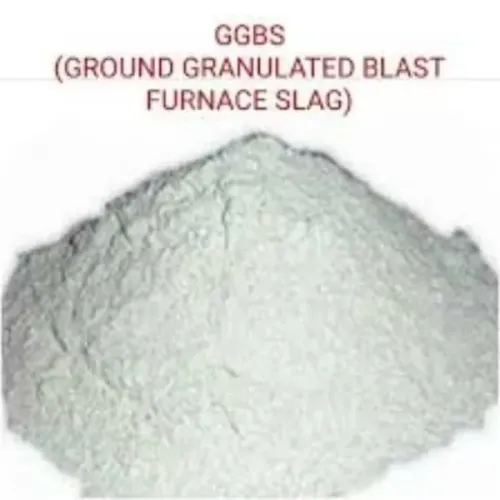
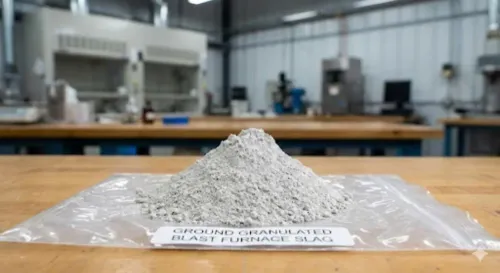
This makes the selection of GGBS Cement manufacturers particularly important when GGBS is being considered for precast mixes.
Start With the Production Cycle
Precast manufacturers should first determine how the proposed binder system will affect daily production.
Questions to examine include:
- When must elements be demoulded?
- What strength is required before lifting?
- Is accelerated curing used?
- How many casting cycles are planned?
- What is the required final strength?
- What surface finish is expected?
- Are durability requirements unusually demanding?
These answers help determine whether a particular GGBS proportion and material specification are suitable.
Early Strength Cannot Be Ignored
GGBS is valued for several long-term concrete characteristics, but precast operations often depend heavily on early strength.
If demoulding is delayed, mould productivity can fall.
That does not automatically make GGBS unsuitable for precast production. It means the complete mix must be engineered around the required production cycle.
Cement characteristics, GGBS fineness, replacement percentage, admixtures, curing temperature, and water-binder ratio can all influence performance.
Consistency Supports Factory Control
Precast factories operate under repeatable manufacturing conditions.
That advantage can be lost if incoming raw materials vary unexpectedly.
A suitable GGBS supplier should therefore support consistent material characteristics across regular deliveries.
Precast quality teams may monitor incoming material information alongside concrete test results to identify trends before they become production problems.
Workability Needs Application-Specific Testing
Different precast products may use very different concrete consistencies.
A heavily reinforced element, a conventional vibrated product, and a self-compacting concrete component will not necessarily need the same fresh properties.
Trial mixes should evaluate the GGBS within the exact production system.
Relevant observations can include:
- Flow characteristics
- Filling ability
- Stability
- Surface finish
- Compaction response
- Setting behaviour
- Strength at demoulding
- Later-age strength
Sustainable Precast Is Gaining Relevance
Precast production already offers opportunities for controlled material use and factory-based quality management.
Supplementary cementitious materials can further support efforts to reduce dependence on conventional clinker-intensive cement.
For manufacturers supplying projects in Nagpur, the ability to develop technically sound concrete with a stronger sustainability profile can also help address evolving project specifications.
Sustainability, however, should not interfere with manufacturing reliability. Any binder modification should be validated against production requirements before routine use.
Supplier Logistics Should Match Factory Consumption
Precast plants need predictable inventory.
A delayed cementitious-material delivery can disrupt scheduled casting, labour utilisation, mould availability, and dispatch commitments.
Before finalising a manufacturer, review typical consumption, storage capacity, reorder levels, lead time, and peak production demand.
IVS Industries supplies GGBS-based materials for construction applications, including requirements where buyers need to balance material performance with dependable procurement.
Establish Approval Criteria Before Purchasing
A practical supplier approval process can cover:
- Technical conformity
- Trial-mix performance
- Early-strength suitability
- Later-age performance
- Batch consistency
- Supply capacity
- Delivery reliability
- Commercial feasibility
This creates a clearer purchasing decision than comparing quotations without production context.
For precast manufacturers, the right GGBS is not simply the material that achieves an acceptable 28-day cube result. It must fit into the entire factory process.
When material characteristics, mix design, curing, production speed, quality control, and logistics are evaluated together, GGBS can become a practical component of high-quality precast concrete production.
Keywords