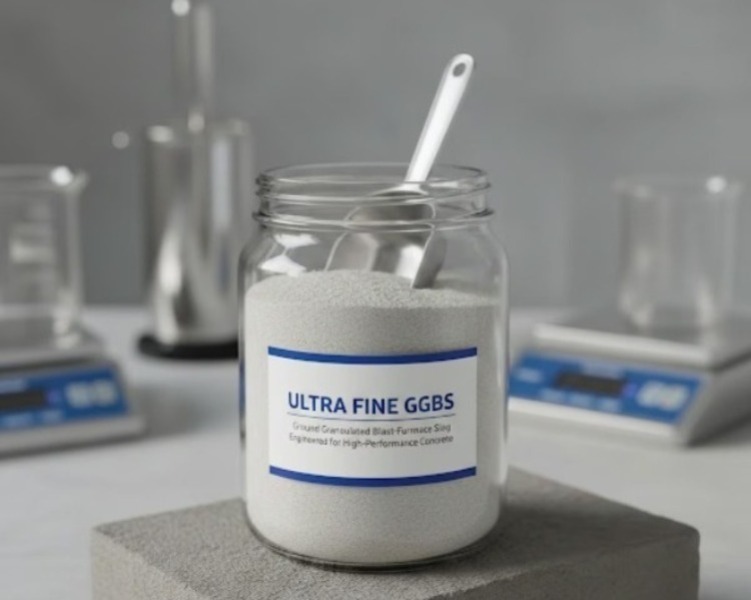
Concrete performance depends on far more than achieving the required compressive strength. For infrastructure contractors, RMC plants, developers, and concrete manufacturers, durability, workability, permeability, heat development, and long-term performance can be equally important. This is where Ultra Fine GGBS becomes relevant as a supplementary cementitious material for selected concrete applications.
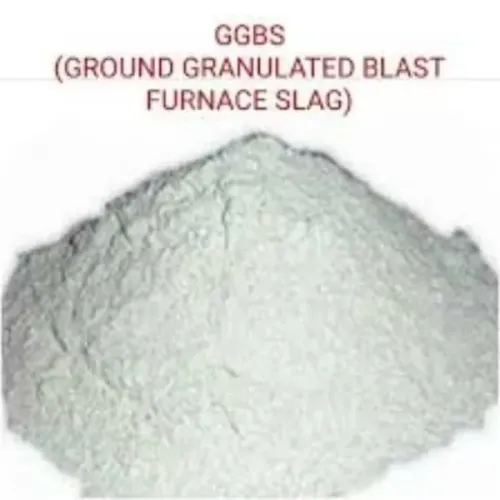
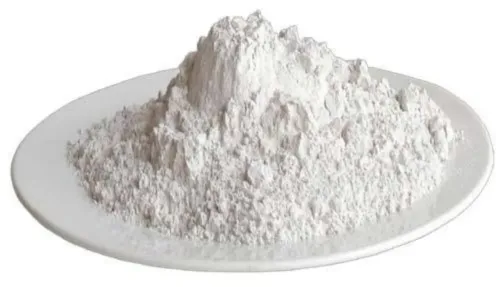
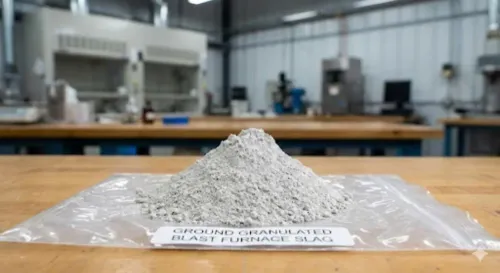
Ground Granulated Blast Furnace Slag is produced from granulated blast furnace slag and processed into a fine powder suitable for use in cementitious systems. When the material is processed to a much finer particle size, it can provide characteristics that make it useful in performance-oriented concrete mix designs.
For construction projects in Nagpur and other parts of Maharashtra, understanding how ultra-fine material behaves within a concrete system helps engineers and procurement teams evaluate it on technical requirements rather than simply treating it as another cement replacement material.
What Makes Ultra Fine GGBS Different
The fineness of a supplementary cementitious material influences how it interacts with cement, water, aggregates, and chemical admixtures.
Ultra Fine GGBS has a finer particle profile than conventional GGBS. The increased fineness can improve particle packing within the cementitious matrix and provide greater surface area for reaction.
Its actual performance, however, depends on several variables, including:
- Chemical composition
- Particle-size distribution
- Fineness
- Cement characteristics
- Water-to-binder ratio
- Replacement level
- Admixture compatibility
- Curing conditions
- Required concrete performance
For this reason, concrete mix trials remain important before adopting a particular proportion for large-scale production.
How Finer Particles Influence the Concrete Matrix
Concrete contains microscopic spaces between cementitious particles. A finer supplementary material can occupy some of these spaces more effectively, contributing to a denser particle arrangement.
This can be valuable where engineers are designing concrete for demanding exposure conditions.
The effect should not be viewed independently of the complete mix. Aggregate grading, binder content, water demand, admixture dosage, placement practices, and curing all influence the final result.
A well-designed mix therefore considers Ultra Fine GGBS as one component of an integrated concrete system rather than as a standalone performance solution.
Potential Benefits in Performance Focused Concrete
Depending on mix proportions and project specifications, appropriately selected GGBS can contribute to several useful concrete characteristics.
These may include:
Improved workability
Suitable GGBS incorporation can support concrete flow and handling characteristics, although the actual response depends on the overall mix.
Reduced permeability
A refined concrete microstructure can help limit the movement of water and aggressive substances through hardened concrete.
Long-term strength development
GGBS-containing mixes can continue developing strength over longer periods when proportioning and curing conditions are appropriate.
Lower heat development
For certain mass-concrete applications, partial replacement of Portland cement with GGBS can help manage heat generated during hydration.
Durability support
Lower permeability and changes in the cementitious matrix can be beneficial in concrete designed for demanding environmental exposure.
These benefits are not automatic. Material quality, dosage, curing, and engineering design remain critical.
Where Ultra Fine GGBS May Be Considered
The material may be evaluated for projects where concrete specifications extend beyond routine strength requirements.
Potential applications can include:
- High-performance concrete
- Infrastructure structures
- Industrial concrete
- RMC production
- Foundations
- Large structural elements
- Precast concrete
- Selected repair materials
- Performance-focused cementitious formulations
A contractor working on a major infrastructure project may have very different requirements from an RMC producer supplying general structural concrete. The appropriate material specification should therefore reflect the intended application.
What Buyers Should Examine Before Selecting the Material
Bulk buyers should avoid making decisions based only on product name or price per tonne.
Technical evaluation should consider the required fineness, consistency, chemical characteristics, supply volume, storage requirements, testing documentation, and compatibility with the intended concrete mix.
For Nagpur-based construction companies and Maharashtra infrastructure projects, logistics also matter. Consistent material availability can become particularly important when concrete production continues over several phases.
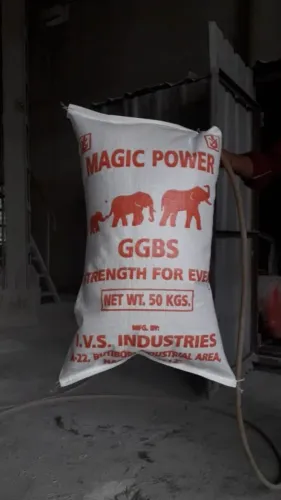
IVS Industries operates within this construction-material supply environment, where buyers may need GGBS specifications aligned with industrial and project requirements.
Practical Questions About Ultra Fine GGBS
Can it simply replace cement at any percentage?
No single replacement percentage is appropriate for every project. The proportion should be established through specifications, engineering requirements, and trial mixes.
Does greater fineness always mean better concrete?
Not automatically. Fineness is only one material characteristic. Concrete performance depends on the complete binder system and mix design.
Is curing still important when GGBS is used?
Yes. Appropriate curing remains essential for strength development and durability.
Can RMC plants use the same mix for every cement source?
Mix performance can change with cement chemistry, aggregates, admixtures, and supplementary cementitious materials. Verification through controlled trials is advisable when significant material changes are introduced.
Ultimately, Ultra Fine GGBS is most useful when its properties are matched to a clearly defined concrete-performance requirement. Understanding particle characteristics, mix compatibility, curing needs, and project conditions allows contractors and concrete producers to use the material more intelligently rather than relying on a generic replacement approach.
Keywords