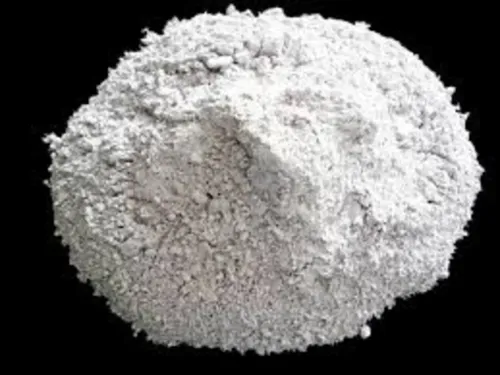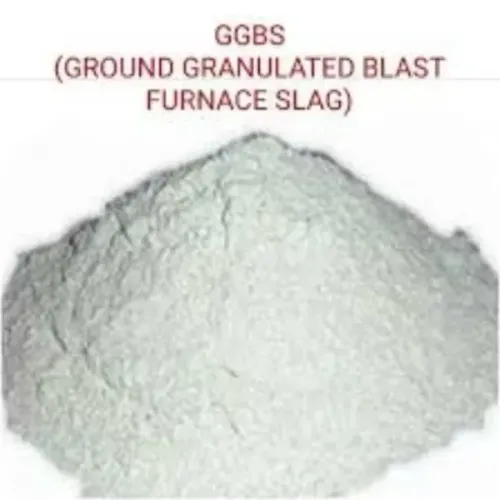
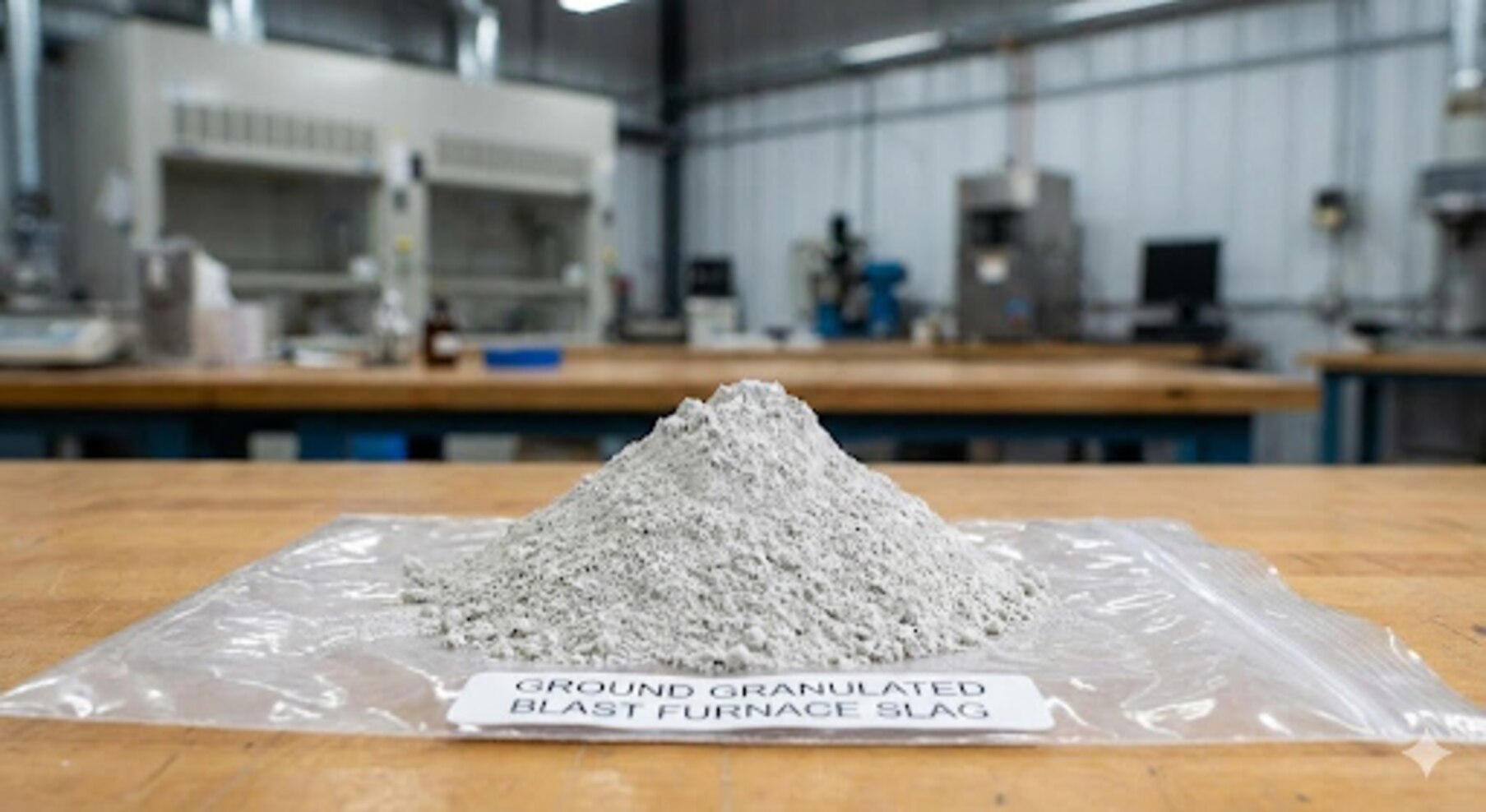
A large GGBS purchase can fail through interrupted deliveries, inconsistent batches, incompatible cement or an unsuitable replacement percentage even when the quoted material meets a product standard. By the end, you will have a practical framework for checking manufacturing capacity, comparing technical evidence, qualifying the mix and writing controls into the supply contract.
Key takeaways
- Check committed capacity against your weekly GGBS delivery schedule.
- Compare test certificates, EN 15167-1 or IS 16714 compliance, and batch data.
- Run plant trials using your cement, aggregates, water and planned GGBS dosage.
- Award on delivered cost, verified performance and supply continuity—not price alone.
Can the manufacturer supply every scheduled delivery, not just the first load?
A nominal annual capacity does not prove secure supply. Verify the capacity remaining after existing commitments against your GGBS required volume, delivery frequency and concrete programme. Ask for monthly and weekly dispatch capacity, the number of operating grinding lines, grinding capacity, raw-slag availability, storage capacity and loading rate.
- Planned maintenance dates and production lead time
- Dispatch locations and transport options
- Distance to the project and access for bulk vehicles
- Approved transport providers and replacement arrangements
- Backup for interruptions at the grinding plant or source blast furnace
Require a written supply plan that maps production, storage and deliveries against each concrete pour. Check that it supports multiple pours without reducing quality or delivery frequency, then test it against a delayed pour and a sudden increase in demand.
Ask what redundancy protects the programme: a second grinding line, another source of granulated slag, an alternate dispatch location or an approved transport provider. Require advance notice of planned shutdowns and source changes.
The plan should state how the supplier will maintain deliveries during an interruption and how quickly it can recover. Confirm that trucks, silos and loading equipment can handle the weekly peak rather than only the average demand.
A first successful load proves little; compare committed capacity with the full construction schedule and require the supply plan as a contractual deliverable.
Which documents and product properties should you compare between manufacturers?
Set the governing standard before comparing quotations. For India, cite IS 16714:2018 and require the supplier to identify the applicable clauses, test methods and acceptance limits for the supplied grade. “IS compliant” is not enough; record the required limits for chemistry, glass content, fineness and strength performance.
ASTM C989/C989M classifies slag cement as Grade 80, Grade 100 or Grade 120 by strength-activity index. EN 15167-1 uses a different framework, so neither classification is interchangeable with the other without checking test methods and acceptance criteria.
| Evidence or property | What to compare | Record for each result |
|---|---|---|
| Fineness | Blaine fineness separately from particle-size distribution | Method, value and limit |
| Composition | Glass content, sulphate, chloride and loss on ignition | Method and acceptance limit |
| Physical behaviour | Moisture, soundness and setting time | Method, age and limit |
| Concrete performance | Strength activity or 28-day strength contribution | Cement, replacement rate and test age |
Request a current technical data sheet, certificate of analysis, batch test reports, source and processing details, safety data sheet and documented quality-control procedure. For every result, ask for the sample date, lot or production period, laboratory identity and test method.
Confirm that the quoted grade fits the concrete mix design, cement type, exposure class and durability tests. A finer Blaine value does not prove a better product, and a grade name does not guarantee performance. Define acceptance limits for the project rather than accepting “ultra fine” as a performance class.
How can trials prove that the proposed GGBS works in your concrete?
Trials prove fit only when they use representative GGBS samples from the proposed production source, the intended Portland cement, aggregates, water and chemical admixture package. Run laboratory mortar trials first, then concrete trials using the proposed mix proportions and replacement percentage.
Record these results against the project’s acceptance limits:
- Water demand, slump retention, air content and setting time.
- Early-age strength at each construction decision age, plus 28-day and later-age strength.
- Heat of hydration and the permeability-related test required by the exposure design, such as chloride migration or water penetration.
- Behaviour under the project’s curing method and expected temperature range.
Low temperature, premature drying and high GGBS replacement can delay setting and reduce early strength. Include those conditions in qualification trials rather than relying on standard laboratory curing alone.
Compare the products by measurable behaviour, not by the label “Ultra Fine”:
| Product | Fineness and dosage | Fresh concrete behaviour | Strength and site implications |
|---|---|---|---|
| Conventional GGBS | Record Blaine fineness and particle-size distribution; establish the replacement percentage by batching | Measure water demand, rheology, slump retention, pumping and finishing | Check early-age, 28-day and later-age strength |
| Ultra Fine GGBS | Verify particle-size distribution and dosage; do not assume finer means better | Check admixture demand, rheology, pumping and finishing separately | Confirm any early-strength benefit through testing |
Ultra Fine GGBS is not automatically a higher-grade material, and its marketing name does not replace particle-size and performance requirements. Repeat compatibility checks when the cement source, admixture chemistry or mix proportions change.
What controls will keep repeated deliveries consistent and usable?
Put batch-to-batch consistency in the purchase contract, not in a single approval certificate. Define the controls before the first delivery arrives.
1. Specify where sampling occurs: finished product, silo, loading line or delivery vehicle. State the test frequency, lot definition, retained-sample quantity and retention period. Require batch identification on every certificate and delivery record, linked to the raw-slag source, grinding line, production date, test results and dispatch location.
2. Set maximum moisture and caking limits, and define how they are checked. State silo inspection rights, aeration requirements, discharge arrangements and maximum storage duration. A damp silo or prolonged storage can turn usable powder into material that bridges, blocks feeders or arrives as hard lumps.
3. Define the response to an out-of-specification result or rejected load: quarantine the material, notify the buyer, investigate the cause, test the retained samples, arrange replacement, and document release or disposal. Do not allow a disputed load into concrete production while its status remains unresolved.
4. Require advance written notice of changes to the raw-slag source, grinding circuit, cementitious blending, laboratory, declared properties or dispatch location. Define requalification triggers when a change could affect concrete behaviour, including renewed trials where necessary.
Request internal trend reviews, not only pass-or-fail certificates, so rising fineness variation, moisture, chloride or falling strength activity is found before it affects several pours.
How should you make the final award when price and performance point in different directions?
Make the award on delivered cost and project risk, not the quoted GGBS price. Include additional testing, storage, transport, rejected-load replacement, trial batching and the cost of delay if a delivery fails or arrives late.
1. Score each bidder for supply resilience, technical fit, change control and environmental documentation alongside price. Supplier qualification should use documented capacity, source traceability, current certificates, representative trial results and a workable rejected-delivery response. IVS INDUSTRIES should be evaluated against the same evidence as every other bidder.
2. State the durability claim and verification test separately. For chloride transport, specify a chloride migration or diffusion test; for heat release, specify calorimetry; for sulfate resistance, specify expansion testing; for chemical resistance, specify the exposure solution, duration and measured property. One favourable result does not establish all four claims.
3. Request a current, third-party-verified environmental product declaration or product carbon footprint declaration. Check its product category rules, declared unit and accounting boundary, including blast-furnace allocation, grinding electricity, transport and packaging. A “low-carbon” label without these details cannot support a fair comparison.
4. Attach the winning limits and procedures to the purchase agreement. Include lot acceptance, test frequency, change-notice periods, requalification triggers, replacement deadlines and delay remedies, so the selected performance cannot be diluted after award.
Related products
 | Ultra Fine GGBS enhances concrete’s workability, reduces permeability, and ensures long-lasting structural performance. View product → |
 | Ground Granulated Blast Furnace Slag (GGBS) Ground Granulated Blast Furnace Slag (GGBS) ₹2800 Ground Granulated Blast Furnace Slag (GGBS) is obtained during the steel making process, when the slag is uenched to form granules. View product → |
Frequently asked questions
How do you verify that a GGBS manufacturer can supply every scheduled delivery?
Compare your required volume and delivery frequency with the manufacturer’s uncommitted monthly and weekly dispatch capacity. Request details of operating grinding lines, raw-slag availability, storage capacity, loading rate and existing customer commitments.
Which documents and GGBS properties should you compare between manufacturers?
Compare recent test certificates and quality records for fineness, glass content, sulphate, chloride, loss on ignition, moisture, density and activity index. Check the stated product standard, such as EN 15167-1 or IS 16714, and confirm that documents identify the batch or production period.
How can concrete trials prove that proposed GGBS works in your mix?
Run laboratory and plant trials with your cement, aggregates, admixture, water and planned replacement percentage. Measure workability retention, setting time, early and later strength, temperature development and finishing behaviour before approving the supplier.
What controls keep repeated GGBS deliveries consistent and usable?
Set acceptance limits, sampling frequency, retained-sample rules and a certificate-of-analysis requirement in the supply contract. Control silo segregation, moisture exposure, unloading procedures, batch traceability and the process for rejecting or quarantining nonconforming loads.
How should you award a GGBS contract when price and performance differ?
Evaluate delivered cost alongside verified concrete performance, continuity capacity, quality variation, technical support, storage requirements and the cost of delays or rejected loads. Use the trial results and documented supply evidence to set a weighted award decision.
Related product
 | Ground Granulated Blast Furnace Slag Ground Granulated Blast Furnace Slag ₹3000 State Powdered Packaging Type Bags/Bulker Packaging Size 50 kg bags/ Jumbo Bags Color Off White Grade Technical Application Laboratory We offer... View product → |