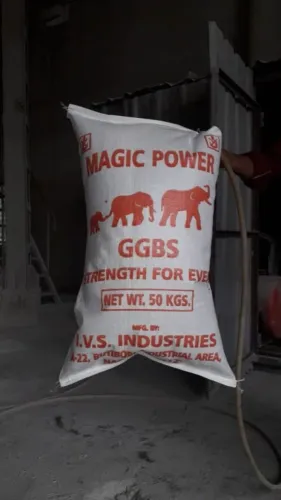

Large construction projects expose weaknesses in material supply chains quickly. A supplier that can comfortably handle occasional orders may face different challenges when demand becomes continuous, documentation requirements increase, and construction schedules depend on timely deliveries.
For contractors and procurement teams evaluating GGBS Cement manufacturers, readiness should therefore be assessed before project consumption reaches its peak.
Readiness Starts With a Clear Material Specification
Large projects normally operate under defined technical requirements.
A prospective supplier should be able to provide relevant material information that allows the project's quality team to assess suitability.
Where trials or approvals are required, these should be completed before routine supply begins.
A project should avoid reaching a critical construction phase while the material source is still undergoing basic technical evaluation.
Production Capacity Must Match the Forecast
Ask suppliers to evaluate the expected quantity profile rather than simply confirming that material is 'available.'
Provide estimated monthly consumption and identify expected peaks.
For example, foundation works, major slabs, structural pours, and infrastructure packages may create periods of unusually high concrete demand.
Supplier readiness means having a realistic plan for those periods.
Logistics Need to Work Repeatedly
One successful delivery does not demonstrate long-term logistics capability.
Bulk material needs to arrive at appropriate intervals without overloading storage capacity or allowing stocks to fall below safe operating levels.
For projects around Nagpur and elsewhere in Maharashtra, transport planning may include route considerations, turnaround times, unloading capacity, and seasonal disruption risks.
The buyer and supplier should establish practical ordering and dispatch procedures early.
Documentation Should Be Routine
Quality paperwork becomes harder to manage when it is treated as an afterthought.
For large projects, required test documentation, delivery records, and traceability information should be incorporated into the normal supply process.
Procurement and quality teams can agree on what is required, who receives it, and how discrepancies will be handled.
Technical Support Begins With Accurate Information
Not every supplier needs to redesign the customer's concrete, but it should be able to communicate accurately about the material being supplied.
The concrete producer or project laboratory remains responsible for determining appropriate mix proportions and verifying performance.
A useful supplier relationship supports that process through consistent product information and transparent communication.
Commercial Capacity Also Matters
Large-volume supply can involve significant working-capital requirements, transport coordination, and recurring invoicing.
Commercial terms should therefore be sustainable for both parties.
Unrealistic pricing can create problems if it cannot be maintained throughout the agreed supply period.
Procurement managers should examine:
- Delivered pricing
- Quantity commitments
- Payment terms
- Freight arrangements
- Price validity
- Order procedures
- Lead times
Warning Signs Deserve Attention
Certain patterns justify closer investigation.
These can include inconsistent technical information, unclear material specifications, inability to discuss recurring quantities, uncertain lead times, missing documentation, and quotations that do not clearly define delivery conditions.
No single issue automatically disqualifies a supplier, but unresolved uncertainty becomes more significant as project volume increases.
What Project Ready Supply Looks Like
A project-ready source should align four areas: material suitability, consistent quality, sufficient supply capacity, and workable logistics.
IVS Industries operates from Nagpur within the construction-material sector, serving buyers whose GGBS requirements may involve planned industrial quantities rather than occasional retail purchases.
The buyer should still perform its own technical, quality, and commercial evaluation according to project requirements.
Frequently Asked Questions
When should supplier evaluation begin
Ideally, before the material is required for routine production, leaving sufficient time for documentation review, trials, approval, and logistics planning.
Should peak demand be disclosed during negotiations
Yes. Accurate forecasts help determine whether the proposed supply arrangement is realistic.
Is local availability enough to establish readiness
No. Location can support logistics, but material quality, capacity, documentation, and delivery performance remain essential.
What is the strongest readiness indicator
There is no single indicator. Readiness is demonstrated when technical capability, production consistency, logistics, documentation, and commercial arrangements work together.
Evaluating GGBS Cement manufacturers before large-scale construction begins gives project teams more control over a critical raw-material supply chain. The objective is not simply to find available GGBS, but to establish whether the proposed source can support the project reliably from initial approval through peak concrete production.
Keywords