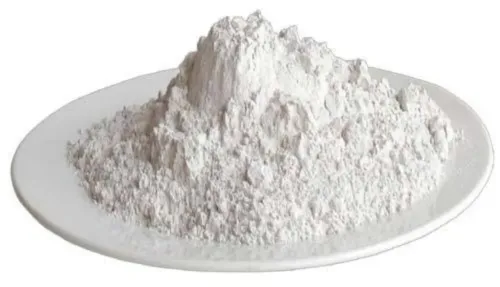
Choosing a GGBS replacement percentage is not a one-for-one cement swap: cement type, slag fineness, temperature, admixture chemistry, curing, and the required construction schedule all change the result. By the end, you will be able to set a trial dosage, specify the tests that matter, and assess whether a manufacturer can support consistent high-performance concrete production.
Key takeaways
- Use 30–40% GGBS as a trial point, not a fixed replacement rule.
- Select Ultra Fine GGBS when early reaction and strength development matter.
- Recalculate water, admixture, and curing requirements after replacing cement.
- Compare batch fineness, chemistry, and strength data to control lot variation.
Set the GGBS replacement level against strength, exposure, and schedule
Start at a 30–40% GGBS replacement percentage for a balanced partial Portland cement replacement in most structural concrete. Treat that range as a trial point, not a universal answer: cement type, slag fineness, temperature, aggregate, and required test age all change strength development.
Use these starting points for the first trial mix:
- C20/25 to C40/50 with ordinary Portland cement: begin at 30–40% when normal stripping and loading times apply.
- C50/60 and higher, or high-performance concrete: begin at 25–40%, then raise the level after confirming early and later-age strength.
- Thick sections, raft foundations, dams, or mass-concrete placements: trial 40–50% to reduce early heat release and temperature rise.
- Chloride or sulfate exposure: trial 40–50%, subject to the project’s durability standard and measured permeability; do not assume the dosage controls every exposure mechanism.
- Carbonation exposure or rapid formwork removal: stay near 25–35% until curing, carbonation depth, and early strength results support a higher level.
A high GGBS level can extend later-age strength gain while delaying setting and early strength, especially in cold weather or with a low-heat cement. Agree whether acceptance is based on 28, 56, or 90 days before batching.
If you use PPC, PSC, or another blended cement, count its existing slag in the total binder. A fast construction timetable favours a lower starting level, warmer controlled curing, or a different cement combination.
Choose conventional or Ultra Fine GGBS for the required reaction rate
Choose conventional GGBS when later-age strength, lower heat release and manageable rheology matter more than rapid early reaction; choose Ultra Fine GGBS when earlier strength justifies tighter control of water and admixture demand. At the same replacement level, the finer product exposes more reactive glass surface to water.
| Option | Conventional GGBS | Ultra Fine GGBS |
|---|---|---|
| Blaine fineness and particle-size distribution | Conventional surface area and broader distribution | Higher Blaine fineness, with more particles at the fine end |
| Water and workability | Usually supports flow and reduces bleeding at equal water | Can increase water demand, cohesion and agglomeration; slump retention may suffer |
| Setting and early strength | Slower reaction and lower early strength gain | Faster glass reaction and higher early strength, subject to temperature and cement chemistry |
| Dosage approach | Start with the specified replacement and verify performance | Do not assume a lower or higher replacement; trial the required strength at the actual fineness |
Blaine fineness alone does not predict performance. Glass structure, particle shape, particle-size distribution and glass reactivity also control water demand, setting and strength. A high Blaine value is a mix-design option, not automatic proof of better GGBS.
Run trials with the actual cement, slag, polycarboxylate admixture and temperature. Adjust water and admixture after measuring slump retention, setting time and early strength; a dosage copied from another binder system can cause stiffening, delayed set or excessive air. Fine slag also increases grinding energy and demands effective dispersion.
Rebuild the mix design instead of substituting cement one-for-one
Start by defining the target total binder, not the cement replacement alone. In the concrete mix design, calculate GGBS as a mass percentage of cement plus GGBS, then verify the resulting cementitious content against strength, exposure, heat, and finishing requirements.
1. Set the water-cementitious ratio from the specified strength and exposure limits. Calculate mixing water from that ratio and the trial aggregate moisture condition; do not add water simply to recover slump.
2. Recalculate chemical admixture dosage with the selected cement, GGBS, aggregates, and mixing sequence. Run trial batches because GGBS can improve slump retention, while Ultra Fine GGBS, high powder content, or poor dispersion can increase viscosity and shorten slump retention.
3. Check paste volume after inserting GGBS. Use the specific gravities of cement and slag to calculate absolute volume, then adjust water, powder, or fine aggregate so the mix does not become harsh, sticky, or prone to bleeding.
4. Trial-batch at the expected concrete temperature and measure slump, air, bleeding, setting, heat release, and strength at the agreed acceptance ages. Include drying shrinkage and exposure-specific durability tests where the design requires them.
5. Extend curing and protect early-age concrete from drying and cold conditions when the slower reaction delays strength or heat development. Confirm stripping, loading, finishing, saw-cutting, and formwork-removal dates from measured strength and temperature data, not ordinary Portland cement practice.
Test the properties that determine high-performance concrete service life
Approve the mix only after testing it with the intended cement, aggregates, admixtures, temperature, placement method, and curing regime. A single 28-day result cannot reveal whether GGBS concrete will resist the project’s actual exposure.
| Property | Test evidence | What it shows |
|---|---|---|
| Fresh concrete | Slump, slump retention, air content, bleeding, setting time, and cohesion | Whether the mix remains placeable without excess water, entrapped air, segregation, or delayed finishing |
| Early age | 1-day and 7-day compressive strength, setting time, and heat evolution | Whether formwork removal, prestressing, loading, and construction sequencing are safe |
| Later age | 28-day compressive strength plus the specified later-age test, such as 56 or 90 days | Whether acceptance matches GGBS’s longer strength development rather than undervaluing the mix |
| Thermal | Adiabatic temperature rise or semi-adiabatic calorimetry | Whether hydration heat will create cracking risk in thick pours or restrained sections |
| Dimensional stability | Drying shrinkage and, where restraint matters, autogenous shrinkage | Whether moisture loss or internal reaction will open cracks |
| Durability | Chloride migration, water absorption, sorptivity, carbonation depth, sulfate resistance, or freeze-thaw testing | Whether the hardened concrete suits chloride, wetting, carbonation, sulfate, or freeze-thaw exposure |
Set acceptance ages and limits before trials begin. Test durability on specimens cured and conditioned to represent service conditions, not only laboratory-standard curing. If ultra-fine GGBS raises early strength but increases paste cohesion or water demand, adjust admixture dosage and repeat the complete test programme.
Use manufacturer quality data to control lot-to-lot concrete variation
Approve a GGBS supply only after reviewing lot-specific evidence, not a brochure or a single historical test. The certificate of analysis should identify the shipment or production lot, governing standard, test dates, and results that can be compared with your approved mix.
- Request chemical composition, including the reported major oxides and sulphur, alkali, and chloride values where required by the project specification.
- Request glass content, fineness, particle-size information, moisture content, and bulk density for each lot or defined production period.
- Confirm conformity with EN 15167-1 or ASTM C989/C989M, whichever governs the project, and obtain the manufacturer’s conformity declaration and test method references.
- Require traceability from the certificate to the delivery documents, silo, bag, or bulk shipment so a failed concrete result can be linked to its material source.
- Ask for historical results and agreed notification limits for changes in fineness, moisture, chemical composition, or strength performance.
For a supplier such as IVS INDUSTRIES, this data gives your laboratory a basis for acceptance testing and trend charts rather than pass-or-fail paperwork alone. Compare every new lot with the approved baseline, then repeat a controlled trial batch when a key value moves outside the agreed range.
Use the intended cement, admixtures, aggregates, water, temperature, and curing regime; check slump retention, setting, air, bleeding, heat, and strength at the specified acceptance ages. This prevents a hidden GGBS change from becoming unexplained concrete variation.
Related products
 | Ground Granulated Blast Furnace Slag Ground Granulated Blast Furnace Slag ₹3000 State Powdered Packaging Type Bags/Bulker Packaging Size 50 kg bags/ Jumbo Bags Color Off White Grade Technical Application Laboratory We offer... View product → |
 | Ground Granulated Blast Furnace Slag (GGBS) Ground Granulated Blast Furnace Slag (GGBS) ₹2800 Ground Granulated Blast Furnace Slag (GGBS) is obtained during the steel making process, when the slag is uenched to form granules. View product → |
Frequently asked questions
What GGBS replacement level should you trial first?
Start at 30–40% for a balanced partial Portland cement replacement, then adjust for cement type, fineness, exposure, temperature, aggregate, and required test age.
When should you choose Ultra Fine GGBS?
Choose Ultra Fine GGBS when the mix requires a faster reaction rate or earlier strength development than conventional GGBS provides.
Can you replace cement with GGBS one-for-one?
No. Rebuild the mix design and reassess water demand, admixture dosage, setting, strength development, curing, and finishing.
Which manufacturer data helps control concrete variation?
Review each lot’s fineness, chemical composition, strength contribution, moisture condition, and test results before approving it for production.
Related product
 | Ultra Fine GGBS enhances concrete’s workability, reduces permeability, and ensures long-lasting structural performance. View product → |