Infrastructure projects can consume large quantities of concrete over long construction periods. Material decisions made during procurement may therefore affect not only concrete performance but also site scheduling, quality documentation, storage planning, and continuity of supply.
When evaluating a Ground granulated blast furnace slag manufacturer, infrastructure contractors need a broader checklist than a simple product-and-price comparison.
Confirm the Project Specification First
Before approaching suppliers, the contractor should understand exactly what the consultant, designer, client, and applicable project documents require.
Relevant questions include:
- What material specification applies?
- What concrete grades will use GGBS?
- Are particular physical characteristics specified?
- What strength ages are important?
- Are durability parameters defined?
- What documentation must accompany supplies?
- How much material will be required during peak construction?
This prevents procurement teams from comparing quotations for materials that may not be technically equivalent.
Ask for Relevant Technical Information
Product documentation should allow the quality team to evaluate whether the proposed material aligns with project requirements.
Depending on the specification, the review may include fineness, physical properties, chemical characteristics, test certificates, and other required quality information.
If project approval requires samples or trials, these should be completed before committing to substantial quantities.
Check Supply Capacity Against the Construction Programme
Infrastructure consumption rarely remains constant.
Piling, foundations, piers, decks, large slabs, and other concrete-intensive phases can create peaks in demand.
The supplier's ability to meet average demand does not necessarily prove it can handle peak requirements.
Contractors should share realistic forecasts and discuss:
- Monthly estimated quantities
- Peak weekly demand
- Delivery frequency
- Storage capacity
- Lead times
- Transport arrangements
- Contingency planning
For projects supplied from Nagpur into other parts of Maharashtra, transport distance and turnaround time should form part of this planning.
Look Beyond a Single Test Certificate
A single compliant sample provides useful information, but long-duration projects require ongoing consistency.
Ask how production quality is controlled and how batch-to-batch variation is managed.
The contractor's own quality plan should also define incoming-material inspection and testing requirements.
This dual approach—supplier quality control plus purchaser verification—helps maintain confidence throughout the project.
Assess Concrete Performance Through Trials
Where required, trial mixes should replicate the intended project materials as closely as practical.
Testing can examine workability, strength development, admixture compatibility, and project-specific durability parameters.
Results should be reviewed against acceptance criteria before the mix enters routine production.
If materials subsequently change significantly, reassessment may be necessary.
Avoid Common Procurement Mistakes
Several mistakes can create avoidable project risk.
Choosing purely on lowest price
A small saving in raw-material cost may become irrelevant if inconsistent supply affects concrete production.
Ignoring peak consumption
Normal delivery capacity may be insufficient during major pours.
Assuming all GGBS is identical
Material characteristics can differ between sources and production conditions.
Changing sources without technical review
An approved concrete mix was developed using specific constituent materials. Changing one component may influence performance.
Underestimating storage
Insufficient protected storage can complicate deliveries and production planning.
Include Commercial Terms After Technical Qualification
Commercial negotiation matters, but it is more productive after technically suitable suppliers have been identified.
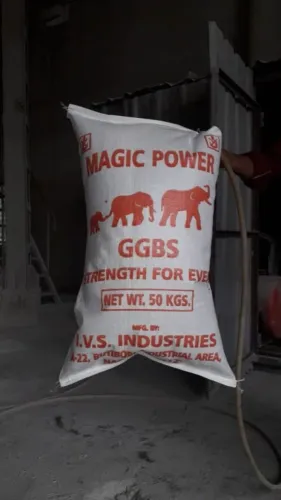
IVS Industries operates in Nagpur's construction-material market, supplying GGBS for buyers whose requirements can involve substantial industrial quantities and planned delivery schedules.
Procurement teams can then evaluate qualified sources using landed cost, payment terms, delivery conditions, quantity commitments, and service responsiveness.
Frequently Asked Questions
Should contractors approve more than one GGBS source
Project requirements determine whether multiple sources can be approved. Where alternatives are considered, each should satisfy the applicable technical and quality process.
Can GGBS be stored like cement
It requires dry, protected storage appropriate for powdered cementitious materials, with measures to prevent moisture ingress and contamination.
Why does supplier location matter
Transport distance can affect landed cost, delivery planning, lead time, and the ability to respond to changes in site consumption.
Is the lowest-cost supplier the most economical choice
Not necessarily. Total procurement value includes material suitability, consistency, logistics, documentation, and the risk of disruption.
For infrastructure procurement, the right Ground granulated blast furnace slag manufacturer is one that can align material quality and supply capability with the actual construction programme rather than merely satisfy the requirements of an initial purchase order.
Keywords