A ready-mix plant can run short of GGBS even when the annual purchase volume looks adequate: pour dates shift, silos fill, trucks are delayed, and a source change can affect the approved mix. By the end, you will have a practical framework for forecasting demand, checking each lot, receiving and storing deliveries, investigating performance changes, and qualifying backup supply without interrupting production.
Key takeaways
- Schedule GGBS deliveries against pour dates and plant storage capacity.
- Require batch numbers, test certificates, and release checks for every shipment.
- Match bulk or bagged delivery to silo access, unloading equipment, and labour.
- Qualify backup suppliers before shortages disrupt concrete production.
Build the Supply Plan Around Pour Schedules, Not Annual Tonnage
Plan each GGBS delivery backward from the pour calendar, not forward from an annual tonnage target. Annual demand helps a manufacturer reserve production capacity; it does not show whether material will reach the RMC plant before a high-volume placing day.
1. Share a rolling pour calendar with the manufacturer, including expected concrete volume, GGBS grade, delivery location, unloading method, packaging format and acceptable delivery window. Update it when major pours move.
2. Use GGBS demand forecasting to convert that calendar into weekly requirements. Compare each requirement with RMC plant inventory, confirmed transport time, minimum order quantity and the manufacturer’s normal and constrained lead times.
3. Complete silo capacity planning before confirming deliveries. Set a reorder point that covers forecast consumption during the longest stated lead time plus transport disruption, then document who owns that safety stock. Do not schedule a tanker that exceeds usable silo space.
4. Obtain the manufacturer’s dispatch capacity, planned maintenance periods, backup loading points and emergency replenishment procedure. Record the named contact and escalation time, rather than relying on an annual capacity figure.
Keep GGBS in a dedicated, dry silo protected from rain and humid air. Inspect aeration and screw feeding, because moisture-induced caking can block discharge and create erratic dosing. Never share the silo with cement or another mineral addition; contamination can alter both the mix and the delivery traceability.
Schedule each tanker against the pour date, silo space and unloading slot, with enough time to quarantine a delayed or suspect load.
Make Every Shipment Identifiable, Testable, and Releasable
Release each shipment against a named production lot, not against a supplier’s general product description. The certificate of analysis should identify the GGBS grade, production date, lot number, dispatch quantity and applicable specification, then report lot-level results rather than one certificate covering several months.
Request a technical package containing:
- A certificate of analysis with GGBS fineness and moisture testing, chemical composition and strength-activity results
- ASTM C989/C989M classification, including Grade 80, 100 or 120, test age and test cement
- The current product data sheet and safety documentation
- Sampling, retained-sample, complaint and product-change procedures
Blaine fineness alone does not prove performance. ASTM C989/C989M grades GGBFS by strength-activity performance, so compare the reported activity index with the cement and test age stated on the certificate. A different feedstock source, glass content, chemistry or moisture level can change grinding behaviour even when fineness appears unchanged.
For bulk deliveries, record the chain from production lot to sealed tanker compartment, delivery weight, receiving silo and concrete-production date. Keep a retained sample and define an isolation procedure before suspect material is blended into several mixes. That record turns a performance question into a traceable investigation.
Require advance notice of changes to feedstock, grinding circuit, specification or dispatch location. Before approving a new source or ultra-fine GGBS, run a plant trial with the intended cement, aggregates, water and admixtures; the certificate cannot predict every change in slump retention, setting or early strength.
Match the Delivery Format to the Plant’s Equipment and Labour
Bulk GGBS tanker delivery suits plants with a dedicated dry silo, unloading line, trained operators and enough stock capacity for full loads. Jumbo bags and paper bags reduce capital requirements but transfer more work to plant staff.
| Format | Equipment and labour at the plant | Main control and trade-off |
|---|---|---|
| Bulk GGBS tanker delivery | Tanker hose, compressor or blower, receiving line, dedicated silo and calibrated weigh records | Use pneumatic transfer into GGBS silo storage. Seal or identify the tanker compartment, record the silo used and retain the delivery paperwork. Unloading is fast, but a blocked line, wet silo or failed aeration system can stop dosing. |
| Jumbo bags | Forklift or hoist, covered staging area, bag-discharge frame and operators for lifting and cutting | Jumbo-bag handling needs protection from rain and humid air. It avoids a permanent silo, but damaged bags, poor discharge and manual handling can interrupt feeding. |
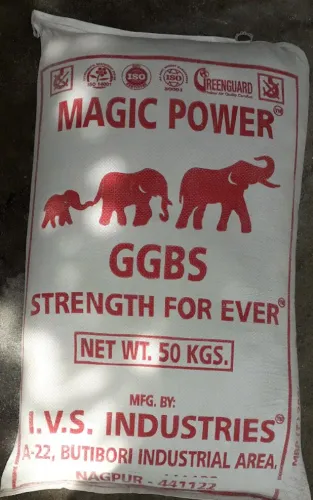
| Bagged GGBS | Pallets, dry warehouse space, pallet truck and labour for opening and charging | This is the most flexible option for small or irregular demand. It takes the longest to move into production and creates more packaging, handling and moisture-exposure points. |
Do not share a silo with cement or another mineral addition. Caking can block aeration or make screw feeding erratic, while contamination can change the intended binder ratio. For every format, link the production lot to the delivery, storage location and concrete-production date so you can isolate suspect material before it enters multiple mixes.
Separate a Supply Problem From a Concrete-Production Problem
A change in concrete performance after a GGBS delivery does not prove a material change. Compare the affected batch with a control made using the previous lot, while holding cement, aggregates, water, admixtures, replacement percentage and target slump constant.
This is the basis of GGBS mix validation; a certificate alone cannot predict the result in your materials and equipment.
Use this diagnostic sequence:
- Check the delivery lot, silo identity and certificate against the approved specification, then test a retained sample for moisture, fineness and the defined chemical or performance limits.
- Inspect the silo for rain entry, humid air, caking, blocked aeration and contamination from shared storage. Check whether the screw feeder delivers a steady mass rather than surging.
- Verify the weigh-batch record, calibration status, gate operation and actual GGBS mass. Confirm that Ultra Fine GGBS dosing has not been entered as ordinary GGBS dosing or altered during a mix-design revision.
- Recheck GGBS water demand through a controlled trial. A changed demand can appear as lost slump, excess admixture or variable air content even when the GGBS passes its certificate tests.
- Compare setting time and early strength at the specified ages using identical curing and test procedures.
If the control reproduces the problem, investigate the material with the manufacturer. If the control passes, trace batching, storage, dosing, admixture age, water measurement and mix-design changes before rejecting the lot. Record each result against the lot number and production date.
Qualify Suppliers, Backup Sources, and Contingency Commitments Before a Shortage
Do not award a source on annual capacity alone. A useful GGBS manufacturer comparison records whether the supplier can deliver during your peak pour period, not merely how much it can grind in a year.
| Factor | Primary supplier | Second source |
|---|---|---|
| Normal and constrained lead time | State both in days | State both in days |
| Minimum order quantity | Match it to silo capacity and usage | Confirm emergency quantity and pack format |
| Dispatch continuity | List tanker capacity, maintenance shutdowns and loading points | Identify alternate loading point and carrier |
| Material qualification | Record feedstock, grade, test data and approved mix trials | Repeat trials before treating the material as interchangeable |
Put these commitments into a supply agreement:
- Name the agreed grade, delivery location, unloading method, delivery window and safety-stock owner.
- Require advance notice of feedstock, grinding line, dispatch-location or formulation changes.
- Record backup logistics, including approved carriers, alternate loading points and emergency contact names.
- Define what happens during allocation: reserved tonnes, priority deliveries, notice period and escalation time.
- Require lot traceability from production through tanker, silo and concrete-production date.
A second source still needs technical approval. Changes in glass content, chemistry, mineralogy, moisture or granule quality can alter grinding and concrete behaviour, so run trials with your production cement, aggregates, water and admixtures before release.
Ask IVS INDUSTRIES, or any shortlisted manufacturer, for this same evidence in writing rather than accepting a capacity claim. Keep the approved-source record with certificates, trial results and change-control decisions.
Related products
 | Ultra Fine GGBS enhances concrete’s workability, reduces permeability, and ensures long-lasting structural performance. View product → |
 | Ground Granulated Blast Furnace Slag (GGBS) Ground Granulated Blast Furnace Slag (GGBS) ₹2800 Ground Granulated Blast Furnace Slag (GGBS) is obtained during the steel making process, when the slag is uenched to form granules. View product → |
Frequently asked questions
Why should GGBS deliveries follow pour schedules instead of annual tonnage?
Annual tonnage reserves production capacity, but pour schedules determine when the RMC plant needs material. Plan deliveries backward from each high-volume placing day and allow time for transport, unloading, and checks.
What shipment records should an RMC plant request for GGBS?
Request the batch number, delivery quantity, dispatch date, product identification, and test certificate. Release the shipment only after the records match the order and the material passes the plant’s acceptance checks.
How should a plant choose between bulk and bagged GGBS delivery?
Match the delivery format to silo capacity, tanker access, unloading equipment, storage conditions, and available labour. Bulk supply suits equipped silos; bagged material requires controlled handling and dry storage.
How can a plant tell whether a problem is with GGBS supply or concrete production?
Compare the delivery quantity, batch records, test results, silo inventory, weighing-system records, and mix settings. A supply issue affects material identity, quantity, or condition; a production issue appears in dosing, batching, or mix-control records.
What should an RMC plant check before relying on a backup GGBS supplier?
Check production capacity, lead times, transport arrangements, product test documentation, delivery format, and contingency commitments. Confirm the supplier can meet the plant’s specification before a shortage occurs.
Related product
 | Ground Granulated Blast Furnace Slag Ground Granulated Blast Furnace Slag ₹3000 State Powdered Packaging Type Bags/Bulker Packaging Size 50 kg bags/ Jumbo Bags Color Off White Grade Technical Application Laboratory We offer... View product → |